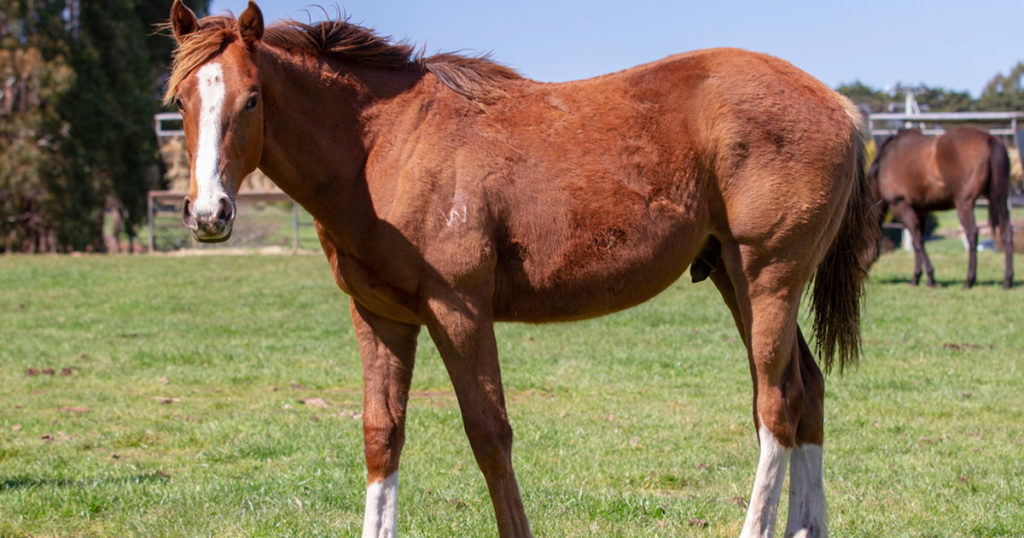
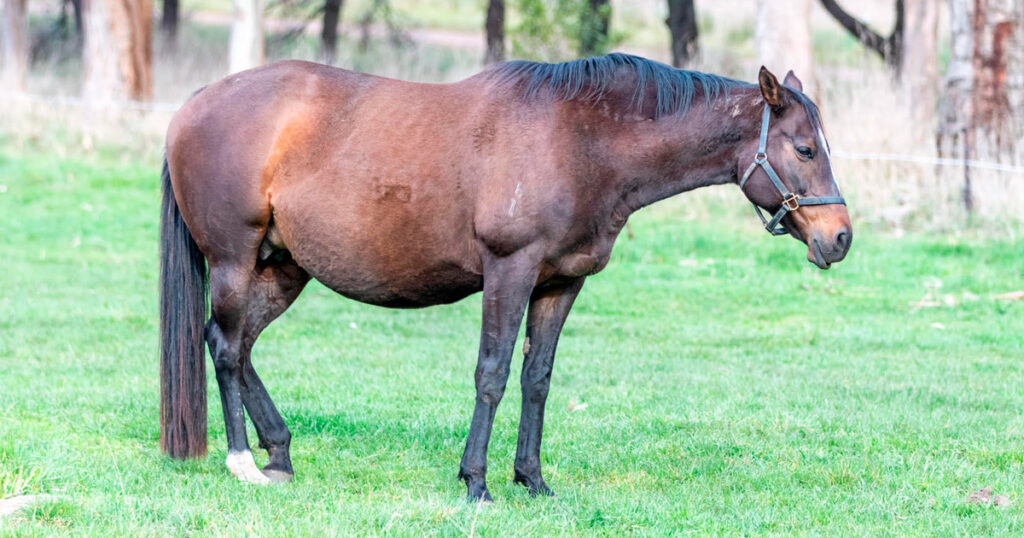
Most breeders focus on broodmare nutrition in late pregnancy or once the foal is at foot. However, how you feed and manage your broodmare year-round has a direct and lasting impact on the orthopaedic health of her foals, weanlings, and yearlings.
Why Broodmare Body Condition Matters
It’s common practice to maintain broodmares in what is considered “good condition.” In reality, this often means mares are kept overweight, based on the belief that heavier mares are more fertile.
But research and field experience suggest otherwise. Excess body fat in broodmares is associated with an increased risk of developmental orthopaedic disease (DOD) in their offspring, including:
- Osteochondrosis (OC)
- Osteochondritis dissecans (OCD)
- Angular limb deformities
- Flexural limb deformities
These conditions can significantly impact sale value, veterinary expenses, training timelines, and long-term soundness and performance outcomes.
The Hidden Problem: “Good Doers” & Nutritional Imbalance
When it comes to health and nutrition of broodmares, some of the most common issues I see in practice are:
- Misjudged body condition
- Underestimated nutrient requirements
- Over-reliance on pasture alone as a sole or primary feed source
- Haphazard or uninformed supplement use
- Feeding based solely on body weight and condition, not nutrient requirements.
This is especially true for “good doing” mares. In an effort to control weight, many broodmares are not feed sufficient quantities of a suitably fortified feed or mineral balancer, meaning they:
- Lack key minerals needed for fertility, immune function and foetal growth and development (e.g. copper, zinc, calcium, magnesium, selenium, iodine)
- Receive inadequate micronutrient support
- May not consume sufficient amounts of essential amino acids such as lysine
- Still consume excess energy
This results is a mare that is overweight but undernourished. The implications of these don’t just impact her immediate health, but reproductive outcomes.
At the same time, supplemental feed, vitamin or minerals are often added without a clear understanding of:
- What the mare actually requires
- How her nutrient needs change from preconception, during the different stages of pregnancy, through to lactation
- Correct dosages
- How nutrients interact
- How any medications the mare may be receiving impact nutrient requirements
- What is already being supplied through pasture and current diet
This can lead to:
- Nutrient imbalances
- Shortfalls in key nutrients required for optimal reproductive health and sound orthopaedic development of the mare’s offspring
- Excesses of nutrients that interfere with absorption of other minerals
- A false sense of “covering all bases”
More supplements generally don’t equate to better nutrition: precision matters. And when it comes to the healthy development of young horses, this is an area which you cannot afford to overlook.
Nutrition & Orthopaedic Development Are Linked
When managing DOD risk in young horses, nutrition and body condition cannot be separated.
All of the following may increase DOD risk:
- Overfeeding energy
- Poor gut microbial health (in both the mare and/or foal)
- Underfeeding essential nutrients
- Feeding certain minerals in excess
- Mineral imbalances
- Inconsistent feeding practices
- Sudden changes in feed
- Feeding in ways that promote high insulin levels
A foal’s orthopaedic health doesn’t start at birth: it starts with how the mare is managed before conception and throughout pregnancy.
The Real Cost of Getting It Wrong
Many developmental issues don’t appear immediately. Instead, they show up later as:
- Swelling, stiffness, lameness (sometimes only subtly)
- Radiograph (x-ray) findings
- Inconsistent performance
- Reduced athletic potential
By that point, the financial and reputational costs are significantly higher.
How to Get It Right
Optimising broodmare nutrition isn’t about feeding less or more, it’s about feeding in a way that promotes health and fertility in the broodmare and sound orthopaedic development in her offspring.
That means:
- Maintaining an appropriate body condition score (not overweight)
- Providing balanced minerals and trace elements in forms which the mare can readily digest, absorb and metabolise
- Adjusting feeding based on pasture, environmental conditions, and reproductive stage
- Ensuring energy (calorie) intake is appropriate given the mare’s unique requirements
- Taking a mare’s reproductive history into account and addressing specific nutrient requirements in relation to this
- Monitoring condition consistently and objectively
- Assessing and addressing the nutritional and metabolic impact of any medications a mare may be receiving
- Feeding to promote optimal gastrointestinal health
Need Help Assessing Your Broodmare Program?
If you’re unsure:
- Where your mare’s body condition currently sits
- Whether her diet is properly balanced
- Specific nutritional requirements of your broodmare
- How to reduce DOD risk in your youngstock
- Why you mare may struggle with fertility or reproductive challenges, despite extensive veterinary intervention
Now is the time to address it, before small issues become expensive problems.
I work with breeders to optimise broodmare nutrition and management, supporting both fertility and the long-term soundness of their youngstock.
If you’d like a clearer understanding of where your mares currently sit and how to improve outcomes heading into the breeding season, feel free to get in touch.
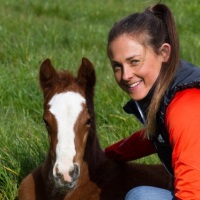
Camilla Whishaw is a highly regarded, experienced horsewoman and naturopath, helping to holistically treat and manage a broad range of equine health conditions and injuries, with a passion for mare and stallion fertility.
As a world-renowned practitioner, presenter, author, and consultant in the field of Equine Naturopathy, Camilla shares her knowledge through keynote presentations, interviews, lectures, panel sessions, and workshop training.